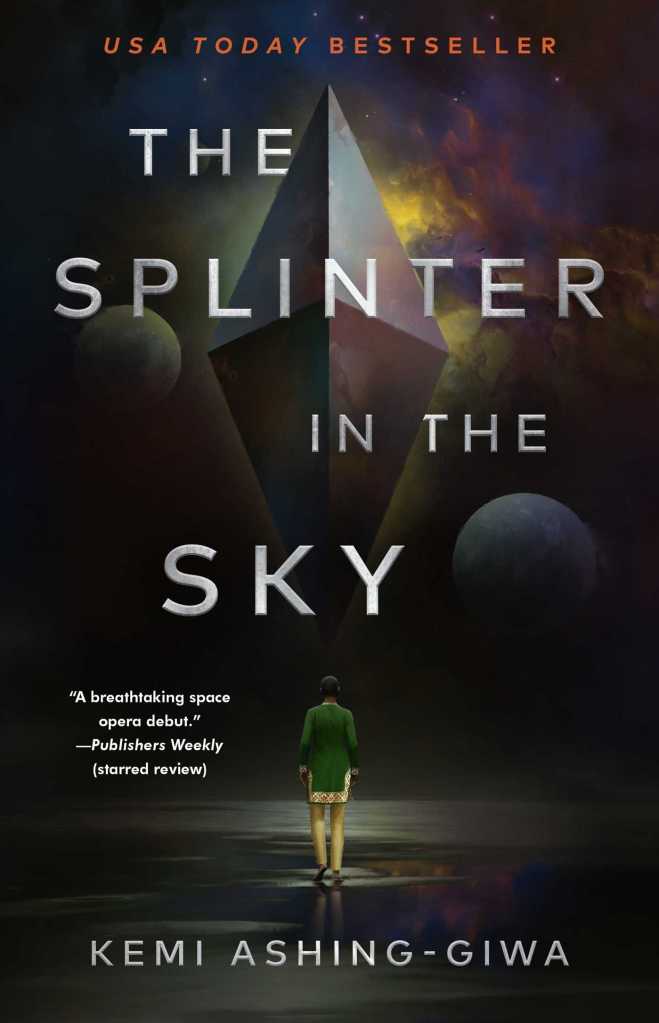
The Splinter in the Sky is out today in trade paperback! (The eBook is also on sale for $1.99 for the rest of August, which just so happens to be my birthday month. And—I learned this a few seconds ago—Barnes & Noble is offering 50% on select hardcovers from 8/16-9/2, mine included.)
To celebrate, here’s (most of) the character art I drew while I was still in the drafting stage.


***
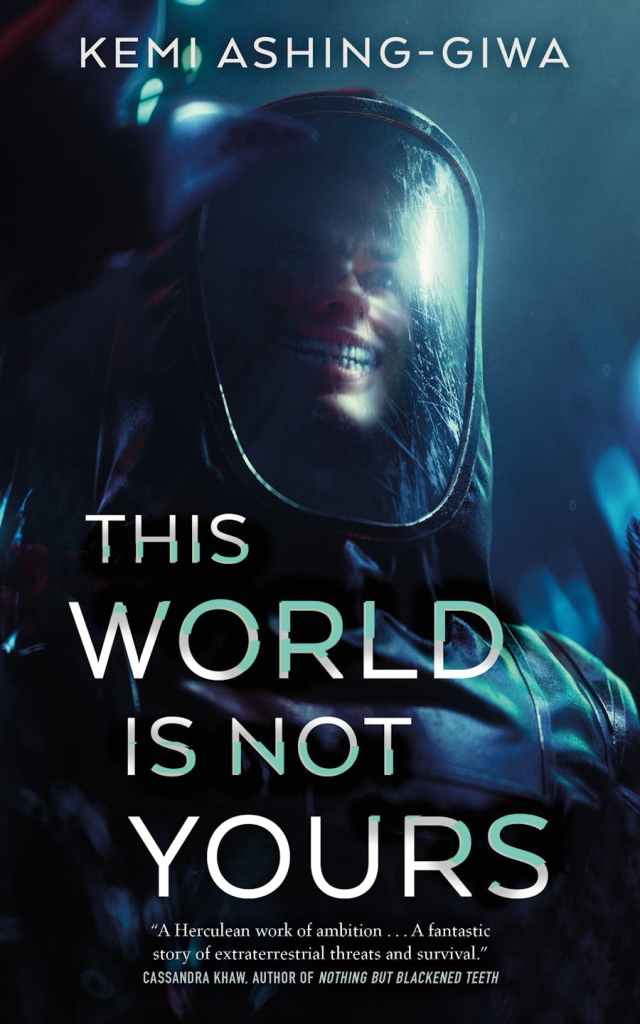
My debut novella This World Is Not Yours hits shelves next month (!), and I’m running a digital preorder campaign for it. Submit your receipts via the form below until 9.10.24 to receive a high-resolution digital poster and three exclusive deleted scene snippets.
***
It’s been a hot minute since I last shared what I’ve been reading. Mostly, I was busy preparing for my qualifying exam in June. (I passed it. Woohoo!) I also recently escaped a particularly terrible reading slump, which is why I’m juggling five books at the moment—I just keep starting new stories until something sparks my interest.
Some of what I’ve read recently:
- Never Whistle at Night: An Indigenous Dark Fiction Anthology edited by Shane Hawk and Theodore C. Van Alst Jr. This book chilled and thrilled me. My favorite pieces were “Quantum” by Nick Medina, “White Hills” by Rebecca Roanhorse, and “Kushtuka” by Mathilda Zeller.
- Castle by Stephen Biesty. I’m tentatively starting a romantasy-adjacent sci-fi horror project, and Biesty’s combination of gorgeous, intricate cross-sections and grisly facts about the High Medieval Period made this book a fantastic worldbuilding resource.
- Fun Home: A Family Tragicomic by Alison Bechdel. Beware: the byline is at once misleading and absolutely true. This moving, occasionally painfully relatable graphic memoir isn’t a tragicomedy—it is, simply, a tragic comic.
- Squire by Nadia Shammas. A phenomenal, beautifully rendered exploration of colonialism and complicity. Highly, highly, highly recommended.
- Princesses Behaving Badly: Real Stories from History Without the Fairy-Tale Endings by Linda Rodríguez McRobbie. I love reading about complicated women who lived a long time ago. That’s all.
- Blood of the Dragon by George R. R. Martin (AKA, the Daenerys chapters from A Game of Thrones). I gave in and binged all of Game of Thrones during my senior year of college. Except for the last season, I thought Daenerys was consistently one of the best-written characters. Assuming that the show always meant to illustrate that a patriarchal world cannot be fixed by a female patriarch, even giving her (what appeared to be) a white savior narrative was a good choice.1 Having read the very beginning of her story with her end in mind, I think Martin layered in a number of hints about her eventual fall from grace, setting a subtle but solid foundation for her villain arc. The desire for vengeance, fiery temper, and hero complex are all there. But, of course, hindsight is 20/20.
- Book club read: Solomon’s Crown by Natasha Siegel. Lush prose, characters that jump off the page, and lots of drama. If you liked Madeline Miller’s The Song of Achilles, I can all but guarantee you’ll enjoy this.
- The Familiar by Leigh Bardugo. Admittedly, I haven’t read as much of Bardugo’s work as it feels like I have, perhaps because on social media you can throw a rock and chances are it’ll hit a quote from one of her books. I read Shadow and Bone in middle or high school, and read a chapter or two of King of Scars, and all of it was solid. (I also watched, and liked, the Netflix adaptation.) 99% of The Familiar is great, but the ending, I have to say, wasn’t exactly my cup of tea.2
What I’m reading now:
- Don’t Go Without Me by Rosemary Valero-O’Connell. Oh, I love this book. I already know it’s going to be one of my favorites. Valero-O’Connell’s art is gorgeous. She’s completely changed my mind about magical realism/contemporary fantasy in general, which doesn’t work for me in prose for some reason, but does the exact opposite in comic form.
- Book club read: Uprooted by Naomi Novik. This book took a bit to really grab me (I find the Dragon quite annoying, and I know where this is headed), but now I’m hooked.
- Emperor of Rome: Ruling the Ancient Roman World by Mary Beard. My favorite classicist has a new book out? Of course I’m going to read it!
- The Language of the Night: Essays on Fantasy and Science Fiction by Ursula K. Le Guin. I am quite literally in the middle of a planned space opera duology (book #1 is drafted, and I’m going to start book #2 in the near future), and it’s heavily influenced by The Left Hand of Darkness. Now seemed like the perfect time to finally read Le Guin’s essays on genre, writing, and her own work.
- A Short History of Nearly Everything by Bill Bryson. Some of the information is quite out of date, but this has been fun so far. I’d recommend it to non-science people interested in learning about the universe and all the stuff in it (so long as they keep an eye out for information that may have been updated in recent years) and to science people who are curious about the history of science and the, er… unique personalities of well-known researchers.
What’s new on the TBR:
- Egypt: In Spectacular Cross-section and Rome: In Spectacular Cross-Section by Stephen Biesty. I liked Castle so much that I had to hunt down the author-illustrator’s other stuff.
- Nothing Ever Dies: Vietnam and the Memory of War by Viet Thanh Nguyen. My friend Ivy recommended this to me, and I trust her taste in nonfiction.
- The City in Glass by Nghi Vo. I loved Vo’s The Empress of Salt and Fortune, and there’s a special place in my heart for standalone novellas.
- It Took Luke by Mark Bouchard. Looks cool.
- In the House of the Worm by George R. R. Martin. I actually snagged a signed copy of this at Balticon in May, but forgot to mention it in my last newsletter. I’m always down for a good science-fantasy-horror mashup.
- I think that Dune: Part II, for example, does a good job of subverting the white savior/benevolent colonizer trope. ↩︎
- SPOILER ALERT: I adore characters with well-defined, limited skillsets who are forced to rely on their wits to make the most of their other abilities, magical or otherwise. I can’t say I love it when those same characters discover a godlike power in the last few chapters, and then wield that power to miraculously solve all their problems. ↩︎
 Kemi Ashing-Giwa
Leave a comment